CHENGDU, April 25 (Xinhua) -- In a futuristic office resembling a space station, Zhao Hongjie, executive vice president of Adaspace Technology Co., Ltd. (ADAspace), outlined a grand vision: to bring intelligent services to every corner of the Earth.
For this commercial aerospace enterprise, based in Chengdu, capital of southwest China's Sichuan Province, 2026 will be a critical year to accelerate its "star compute" initiative.
The "star compute" plan is an ambitious project by the company to build AI space infrastructure composed of 2,800 computing satellites.
Under the plan, the "star compute" network will consist of 2,400 inference computing satellites and 400 training computing satellites, deployed in dawn-dusk orbits, sun-synchronous orbits and low-inclination orbits at altitudes between 500 and 1,000 kilometers. Through satellite-to-ground and inter-satellite laser communication networking, it will ultimately form a global training and inference computing network, capable of delivering inference power at the hundred-thousand-petaflop level and training power at the million-petaflop level.
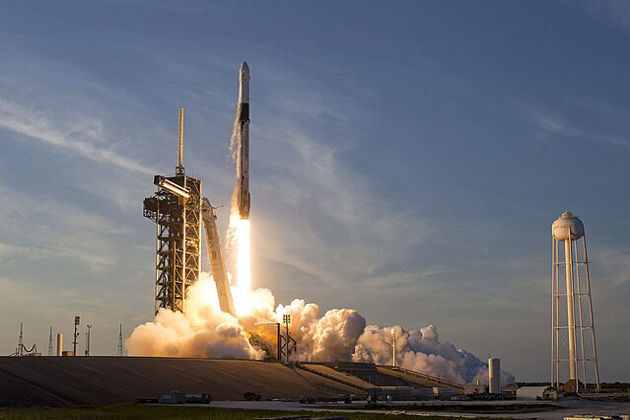
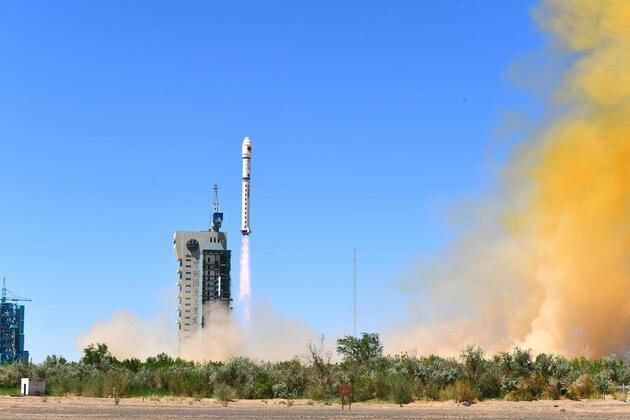
The first group of satellites for this plan were successfully launched in May 2025. The second and third groups are already in production and are scheduled for orbital deployment in 2026, Zhao said.
The plan aims to build a thousand-satellite-scale network and start commercial operations by 2030, with over 95 percent being inference computing satellites, and to complete the full network of 2,800 satellites by 2035.
Over the past year, the company has completed multiple important technical validations and breakthroughs in a row.
Collaborating with Shanghai Jiao Tong University in east China, ADAspace recently completed the world's first instance of using space-based computing power to control a ground robot.
"This technological validation means that in the future, when ground networks are unavailable, we can directly call upon space-based computing power via satellites to command intelligent agents like humanoid robots, quadruped robot dogs, autonomous vehicles and drones, enabling operations without blind spots," Zhao said.
In November last year, a team of the company successfully deployed Alibaba's Qwen3 large language model to the first cluster of the "star compute" satellites, completing the world's first in-orbit deployment of a general-purpose large model, with the end-to-end inference process taking less than two minutes.
Furthermore, on March 26 this year, ADAspace, in collaboration with the small and medium-sized enterprises development promotion center of the Ministry of Industry and Information Technology, launched the world's first space-based computing power cloud service platform for enterprises, named Prometheus. This marks the transition of the space-based computing industry from technological breakthrough to productization.
The construction of space-based computing power infrastructure is profoundly significant, as it will fundamentally alter the global supply pattern of computing power. Currently, global AI development faces a computing power bottleneck, especially in edge computing and real-time inference scenarios, where ground-based computing power falls short, Zhao said.
A report by Yan Zhiyong, a researcher at China Telecom Cloud Technology Co., Ltd., presented at a forum during the 2026 Space Day of China on Friday, confirmed the deep-seated problems faced by ground-based computing power.
He pointed out that global data centers consume 1.5 percent of the world's electricity generation, with 40 percent used for cooling, leaving little room for improving energy efficiency. Meanwhile, 70 percent of the world's land and 95 percent of the oceans are network blind zones. Transoceanic fiber optics struggle to support real-time interactive applications. Ground data centers are vulnerable to natural disasters.
In contrast, space-based computing power has multiple advantages: space-based solar power generation efficiency can be several times that of ground-based photovoltaics, virtually unaffected by day-night cycles and weather. Also, the deep-cold environment of space, approaching absolute zero, can significantly reduce cooling energy consumption, Yan said.
There is already a practical market demand for space-based computing power. However, Yan noted the severe challenges facing space computing hardware infrastructure. Extreme environments of vacuum, drastic temperature fluctuations, microgravity and intense radiation impose extremely high demands on hardware material selection, mechanical structure, chip heat dissipation and electrical performance. Post-launch maintenance of satellites is, notably, prohibitively expensive or even impossible.
In the space computing domain, Zhejiang Lab, a research institution based in Hangzhou, east China's Zhejiang Province, and focused on frontier technology, represents another formidable force.
Li Chao, director of the space-based computing system research center at Zhejiang Lab, pointed out at a forum during the 2026 Space Day of China that due to limited communication bandwidth, traditional satellites are severely deficient in downlinking data. Currently, up to 90 percent of the data generated in space is lost and never effectively processed.
To address this, Zhejiang Lab launched the "Three-Body Computing Constellation" project, aiming to send AI into space to achieve in-orbit data processing. On May 14, 2025, the first batch of 12 computing satellites of the "Three-Body Computing Constellation" successfully entered orbit. According to the plan, the constellation will reach a scale of 100 satellites by 2027. The team has also deployed and validated 10 AI models in orbit in collaboration with partners.
The China Academy of Information and Communications Technology (CAICT) recently took the lead in establishing a space computing power professional committee, according to Xie Lina, a researcher at the CAICT.
The committee focuses on key areas such as space-borne AI chips, inter-satellite laser communication, efficient thermal control and space photovoltaics, conducting joint technological research and promoting transformation of technological solutions from "technically viable" to "commercially feasible," said Xie.
According to CAICT's preliminary estimates, the scale of China's space computing power industry is expected to exceed 250 billion yuan (about 36.6 billion U.S. dollars) by 2030.
Meanwhile, a state-level design for space computing is also advancing.
China has launched a comprehensive feasibility study and pre-project assessment for a space-based intelligent computing constellation, Yu Guobin, deputy director of the commercial space department from the China National Space Administration, said recently.
According to the Ministry of Industry and Information Technology, China is accelerating the cultivation of its space computing industrial ecosystem.
The ministry will support forward-looking research on space computing, gradually establish a standards system covering hardware, software, networking and security, and promote the R&D of technologies and products like space-borne radiation-resistant chips and inter-satellite laser communications.
"In the future, space-based computing power will become a universal public service, just like water and electricity. Whether it is real-time decision-making for autonomous vehicles, coordinated control of drone swarms, or data processing for deep-sea exploration equipment, it can all be achieved through space-based computing power," Zhao added.



 Share
Share
 Tweet
Tweet
 Share
Share
 Flip
Flip
 Email
Email