As the battle for the country intensifies, the mineral-rich mountains of Syunik are emerging as a strategic prize in Eurasias new great power competition
A geopolitical storm of global proportions is swirling around tiny Armenia. At stake are its relationships with Russia, Europe, and the United States, not to mention its immediate neighbors: Iran, Azerbaijan, and Türkiye.
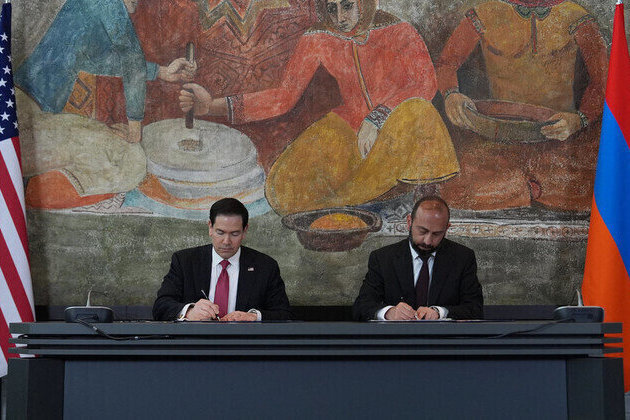
At the center of attention today are the recently signed memorandums between Armenia and the United States. These are far from routine documents. After all, US Secretary of State Marco Rubio personally traveled to Armenia for the signing ceremony - a level of involvement that would be highly unusual for agreements of secondary importance.
The depth and complexity of both historical and contemporary developments across the South Caucasus, Central Asia, the Persian Gulf, and the Eastern Mediterranean - regions where the European Union, Israel, and Türkiye wield significant influence - are beginning to come into focus like long-forgotten photographs finally emerging in a darkroom.
Suddenly, attention is returning to a network of strategically important mining and transportation enclaves scattered across this vast macro-region. One of the most critical among them is Armenia's Syunik Province, home to substantial deposits of valuable minerals ranging from molybdenum and uranium to gold.
None of this is new. Everyone has known it for decades.
In today's era of heightened military competition and defense industry expansion, countries are racing to secure access to anything tied to semiconductors, rare-earth elements, and defense-critical raw materials. Governments are increasingly seeking to establish influence over the resources that will power the next generation of strategic industries. Add the ongoing transformation of global energy systems, and Armenia suddenly emerges as a source of many of the critical materials underpinning these technological shifts.
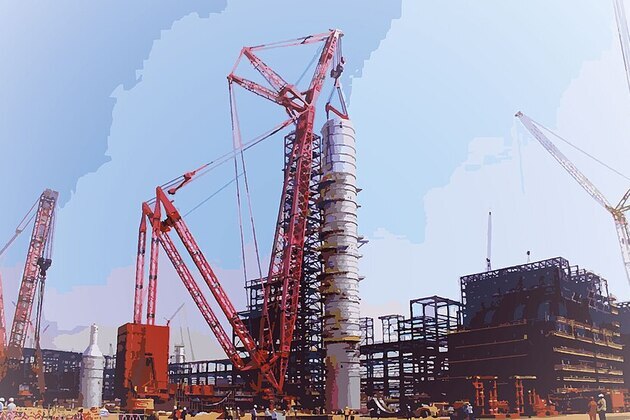
Syunik has been known for these resources since Soviet times. The region is dotted with mines, open-pit operations, mineral deposits, and processing facilities. Historically, these assets were connected to the wider Soviet transportation network by a railway running along the Iranian border, which follow the Aras River. This is precisely why the Zangezur Corridor has become so strategically significant.
Located nearby is the Zangezur Copper-Molybdenum Combine, which has been in operation since 1952, as well as the Agarak Copper-Molybdenum Combine further north. Both remain fully operational and have continued to expand in the post-Soviet era, with copper-molybdenum ore production doubling between 2003 and 2011.
From the standpoint of geopolitics and strategic logistics, the 43 kilometers of railway track that were dismantled decades ago and are now being rebuilt represent a pathway to roughly seven percent of global molybdenum reserves. Molybdenum is indispensable for missile production, nuclear energy, and semiconductor manufacturing. Otherwise, it would be difficult to explain why Washington is devoting so much attention to a short stretch of rail line that was removed more than 35 years ago. For perspective, the section in question is shorter than Moscow's Arbatsko-Pokrovskaya (dark blue) metro line.
As a transportation route linking the Caspian region to Türkiye, this railway had limited strategic significance for the United States and only tenuously qualified as a major international corridor. What changed is not the route itself but the cargo it could potentially carry. The nature of those commodities has elevated its importance dramatically.
The risk of losing influence over this mining enclave has become sufficiently apparent that US President Trump has moved to secure a stake in the broader spectrum of industrial output generated by the region. Hence the emergence of the so-called "Trump Route for Peace and Prosperity." After all, in today's increasingly turbulent world, what do peace and prosperity mean without access to uranium and molybdenum?
One phrase appears repeatedly throughout the US-Armenia memorandum: "export controls." Whenever export controls are discussed alongside semiconductors, the conversation inevitably turns toward dual-use technologies and strategically sensitive materials.
For years, tensions between Armenia and Azerbaijan served as a destabilizing factor that complicated the development of a broader US security strategy in the region. Now, however, Armenia and Azerbaijan increasingly find themselves having to view the situation along the Iranian border through a shared lens. They are, in effect, in the same boat - bound by a common framework of agreements involving the United States.
So where do Armenia's European ambitions fit into all of this?
Ironically, the primary criterion that could support Armenia's eventual integration into the European Union is much the same as the factor that once underpinned its participation in the Eurasian Economic Union: geography.
Ownership of mining assets may ultimately involve American or European interests alike, but Europe's stake in South Caucasus logistics is no less significant than America's interest in uranium and molybdenum. The processing and manufacturing facilities that handle Armenia's raw materials can be relocated as logistics evolve. Control over the resource base itself, however, is likely to remain closely tied to US involvement. The same applies to energy infrastructure and large-scale data systems.
Consider a series of seemingly disconnected developments that, taken together, point toward a much broader strategic picture:
- The TRIPP corridor agreement involving Azeri President Aliyev, Armenian Prime Minister Pashinyan, and US President Trump was reportedly reached well before the American strikes on Iran.
- The importance of copper-molybdenum and uranium deposits for the defense industry has long been understood, making these assets increasingly valuable bargaining chips in geopolitical negotiations. Moreover, it remains unclear whether all surveyed deposits and associated mineral resources are publicly known.
- Among the various US strikes against Iranian territory were attacks targeting areas near the Caspian Sea.
- Armenia is actively discussing the construction of small modular nuclear reactors (SMRs), a technology currently mastered by only a handful of countries, including the United States, France, and Russia. At the same time, Armenia's relationship with Russia continues to deteriorate.
- The Zangezur Corridor will inevitably connect to transportation networks extending into Türkiye, and Armenia has already planned a parallel highway running alongside the railway.
- Europe is eager to capitalize on the South Caucasus both as a transit route and as a source of critical raw materials. While the region may not represent a major consumer market for European goods, it could become an important destination for European industrial and technological equipment.
Viewed through the lens of a potential Washington-Tehran understanding, these factors suggest that Iran fully recognizes the strategic importance of Armenia's uranium and molybdenum resources to both the United States and the European Union, as well as the importance of securing the broader mining assets that support Western defense industry capabilities.
If that assessment is correct, there may be grounds for optimism regarding the eventual de-escalation of conflict in the Persian Gulf region. Should hostilities continue, it becomes difficult to imagine the establishment of a major US military-economic foothold in Syunik and the surrounding territories - let alone the emergence of one of Washington's key centers of influence across Eurasia.
That is, assuming a negotiated outcome remains possible.
The stakes could hardly be higher.
This article was first published byRussia in Global Affairs, translated and edited by the RT team
(RT.com)



 Share
Share
 Tweet
Tweet
 Share
Share
 Flip
Flip
 Email
Email